Have you ever stopped to think about how your favorite instant coffee, protein powder, or even laundry detergent gets from a massive silo of raw ingredients into that perfectly sealed pouch or box you buy at the store? The answer lies in the Fully Automatic Mixing and Packaging Production Line —a high-tech marvel of modern manufacturing that handles everything from blending raw materials to placing the finished product onto a pallet, often without a single human hand touching the product.
Why Automation Rules the Packaging World
Before the era of full automation, packaging was a labor-intensive, time-consuming process. Workers manually measured ingredients, transferred them between machines, and struggled to maintain consistent quality and speed. Today, automation has revolutionized this, offering three core benefits:
Speed and Efficiency
An automated line operates at incredible speeds, often filling and sealing hundreds of packages per minute. Unlike human workers, machines don’t get tired or slow down, ensuring continuous production and maximizing output. This high throughput is essential for meeting the massive demand for consumer goods.
Precision and Quality
When dealing with precise formulas, such as pharmaceuticals or baking mixes, slight variations in ingredient weight can ruin an entire batch. Automated systems use sophisticated sensors and dosing mechanisms (like high-precision auger fillers) that measure ingredients with remarkable accuracy, often down to a fraction of a gram. This precision guarantees a consistent, high-quality product every single time.
Safety and Hygiene
In industries like food and medicine, maintaining a sterile environment is critical. Fully enclosed, automatic systems minimize human contact with the product, drastically reducing the risk of contamination. Furthermore, these systems can handle hazardous materials (like strong chemicals) safely, protecting human workers from exposure.
The Journey: Stages of the Production Line
A fully automatic mixing and packaging line is a symphony of interconnected machines. The process can be broken down into three main acts: Mixing/Preparation , Packaging , and End-of-Line Processing .
1. Preparation: The Heart of the Mix
This is where the product itself is created.
Ingredient Dosing and Weighing
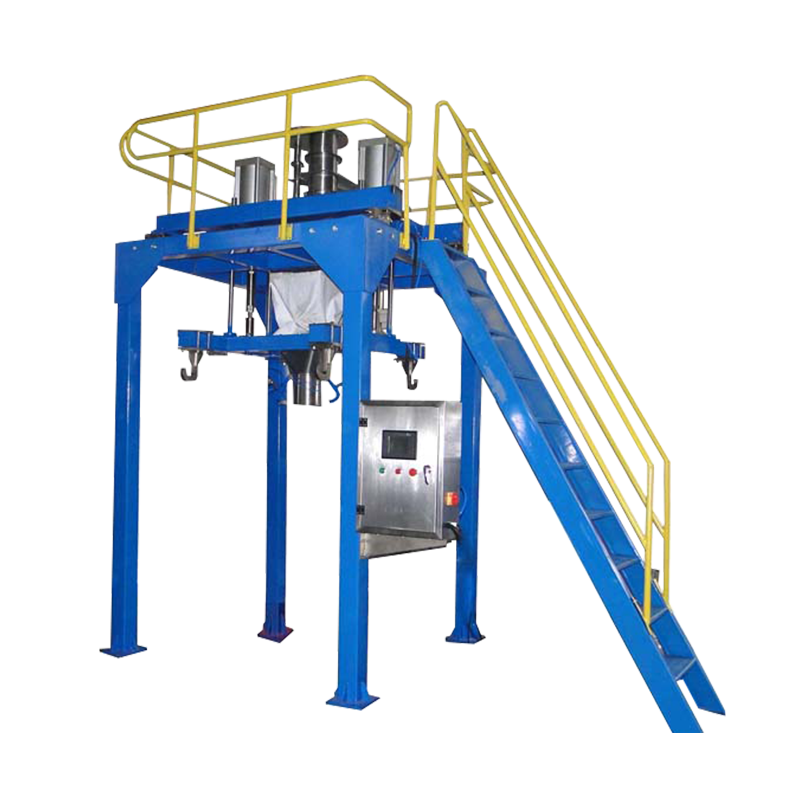
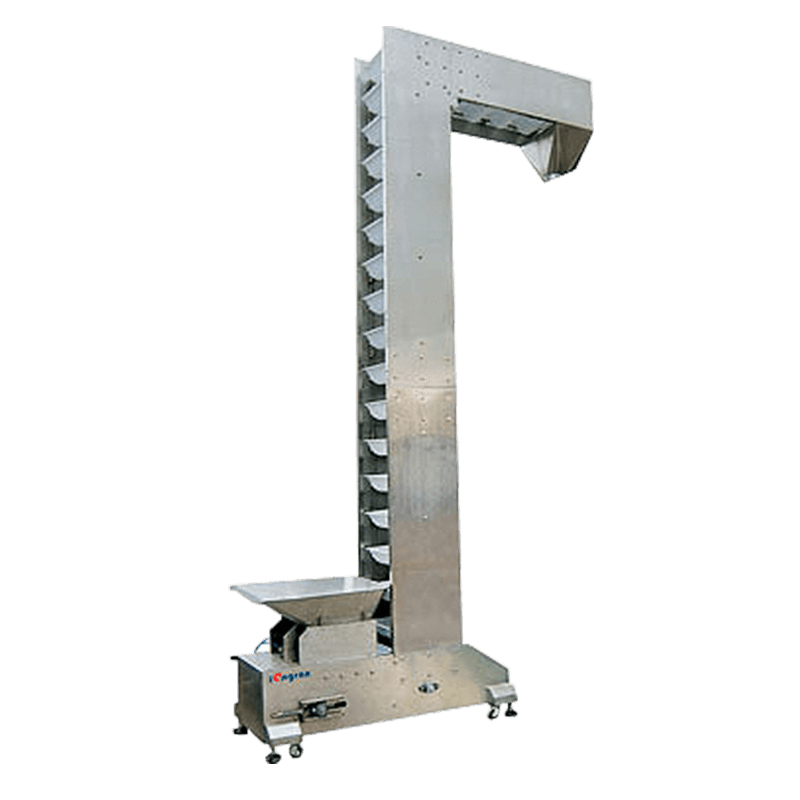
The process begins by drawing raw materials (powders, granules, or liquids) from large storage containers called silos or hoppers . Precise electronic scales and flow meters meticulously weigh and dose each ingredient according to the specific product recipe.
The Blending Machine
Once all ingredients are correctly measured, they are sent into a mixer or blender . The type of blender varies based on the product: a V-mixer or ribbon blender is common for dry powders, while large tanks with powerful agitators are used for liquids or slurries. This stage ensures a homogeneous (perfectly uniform) mix, so every package contains the exact same composition.
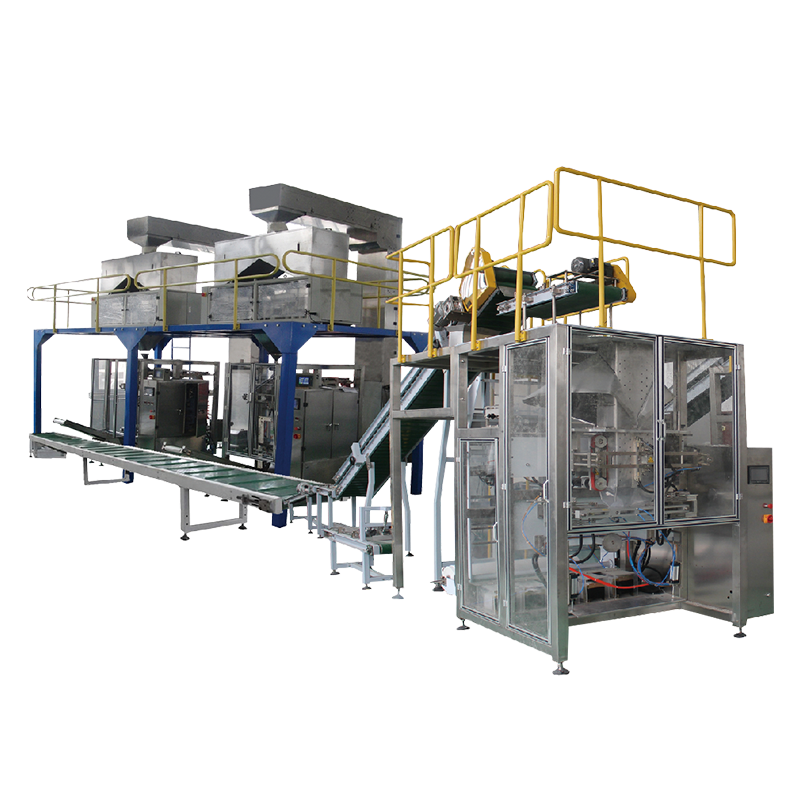
2. Packaging: From Bulk to Bag
This is the most visually fascinating stage, where the mixed product is funneled into its final container.
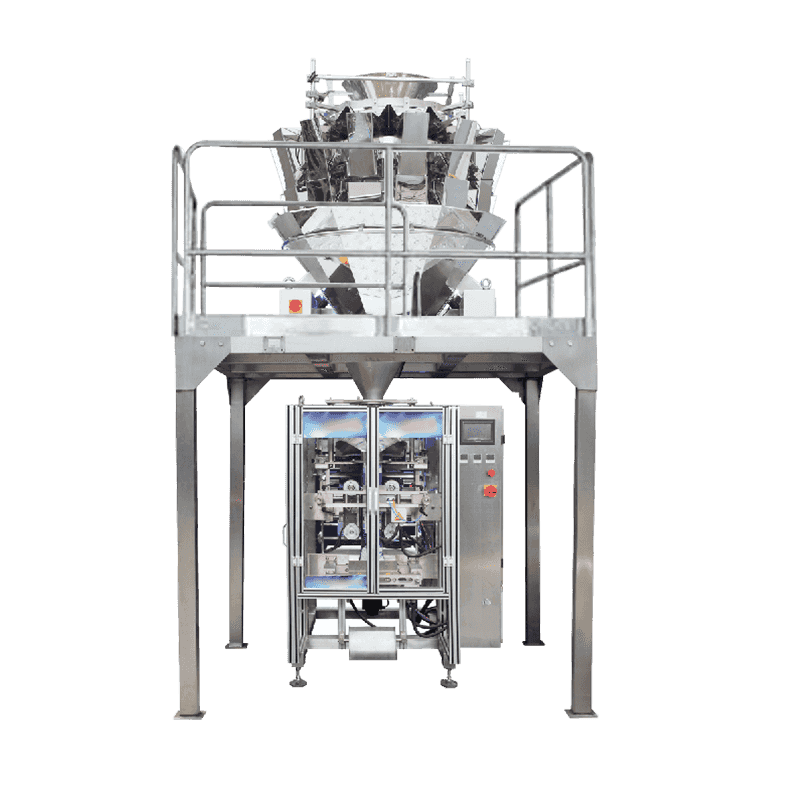
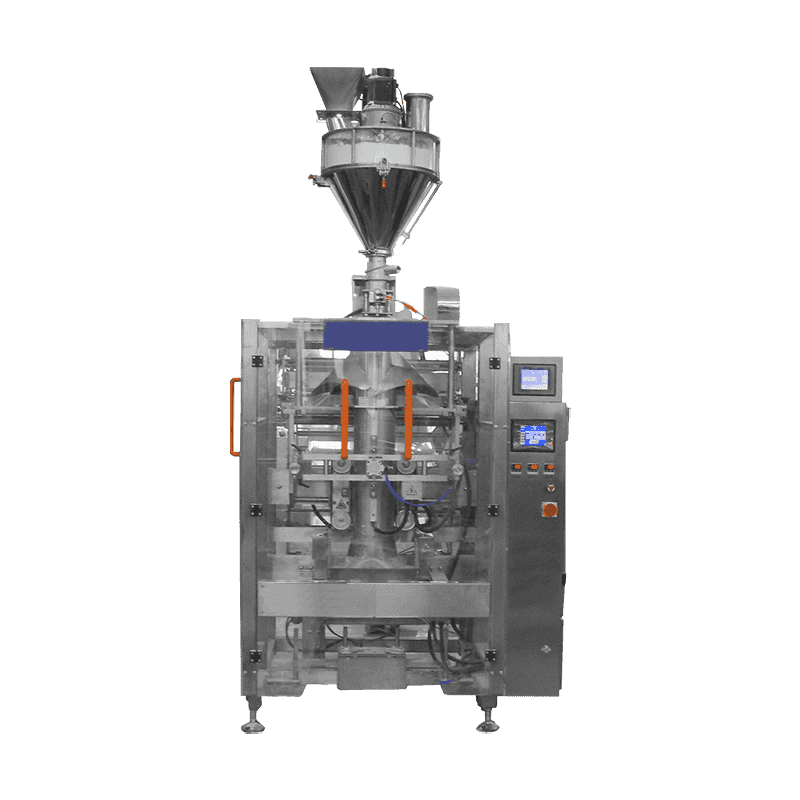
Form-Fill-Seal (FFS) Machine
For pouches, bags, and packets, the FFS machine is the star. It takes a large roll of packaging film and performs three tasks in rapid succession:
- Form: It shapes the flat film into a tube or pouch.
- Fill: The blended product drops into the newly formed pouch.
- Seal: Heat or pressure seals the top and cuts the finished package.
Filling Machines for Rigid Containers
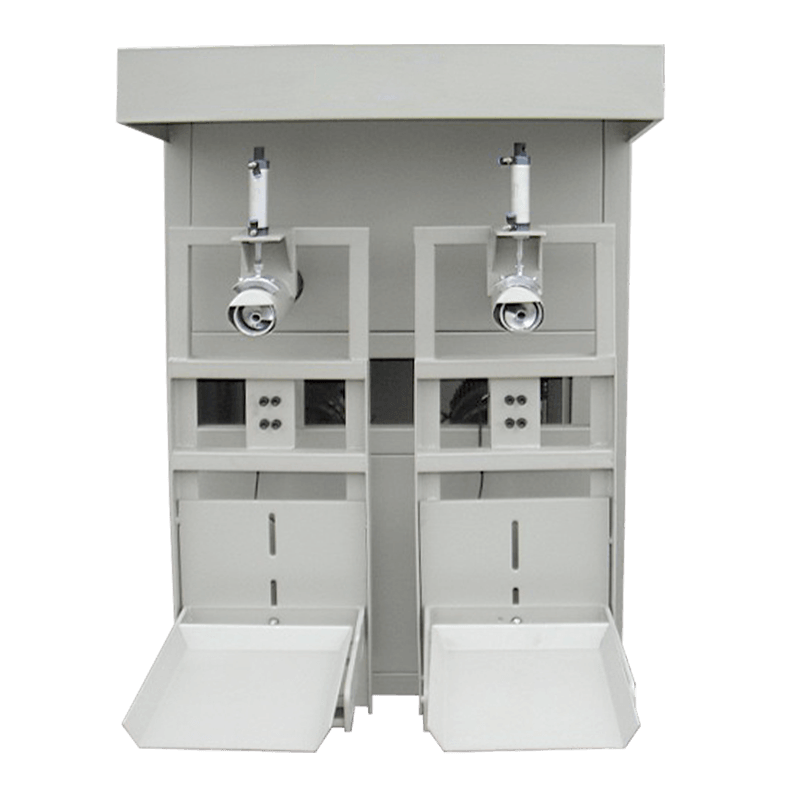
For jars, bottles, or rigid boxes, the filling process uses different mechanisms. Auger fillers are common for dry powders, using a rotating screw to push a precise volume of product into the container. Piston fillers or gravity fillers are typically used for liquids.
Quality Control and Labeling
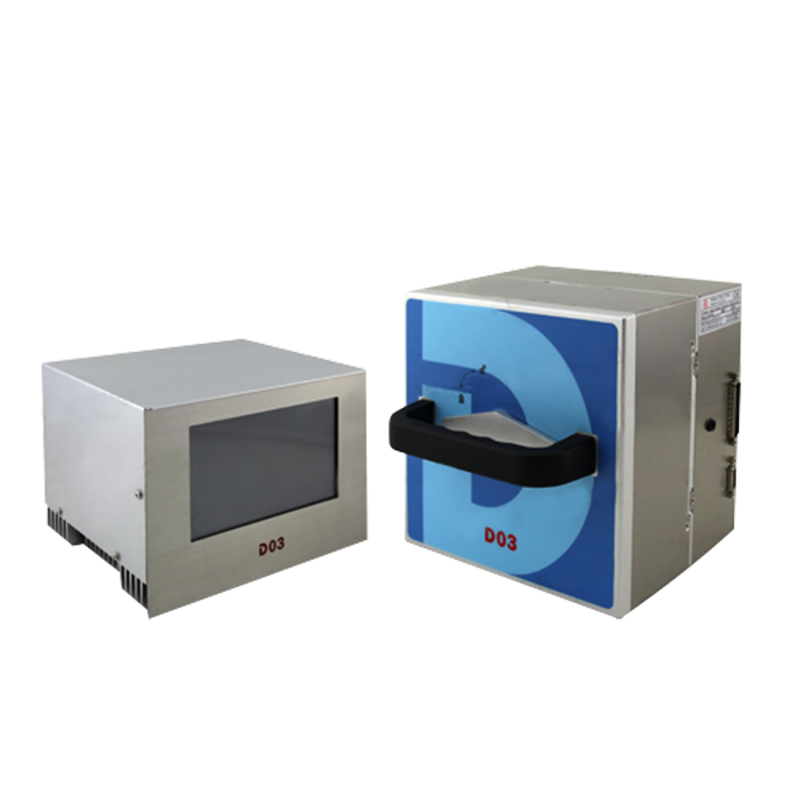
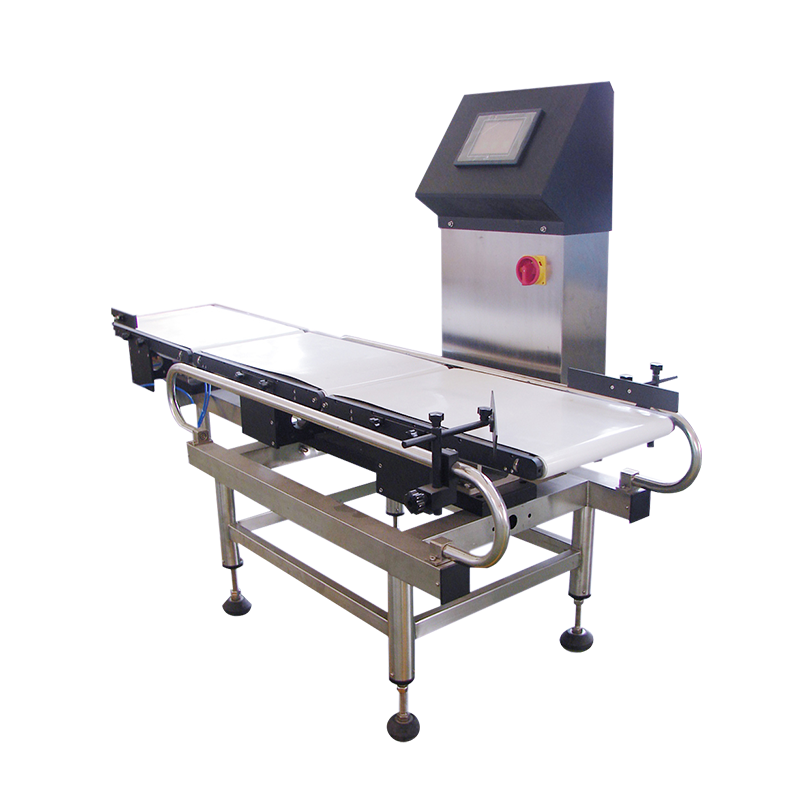
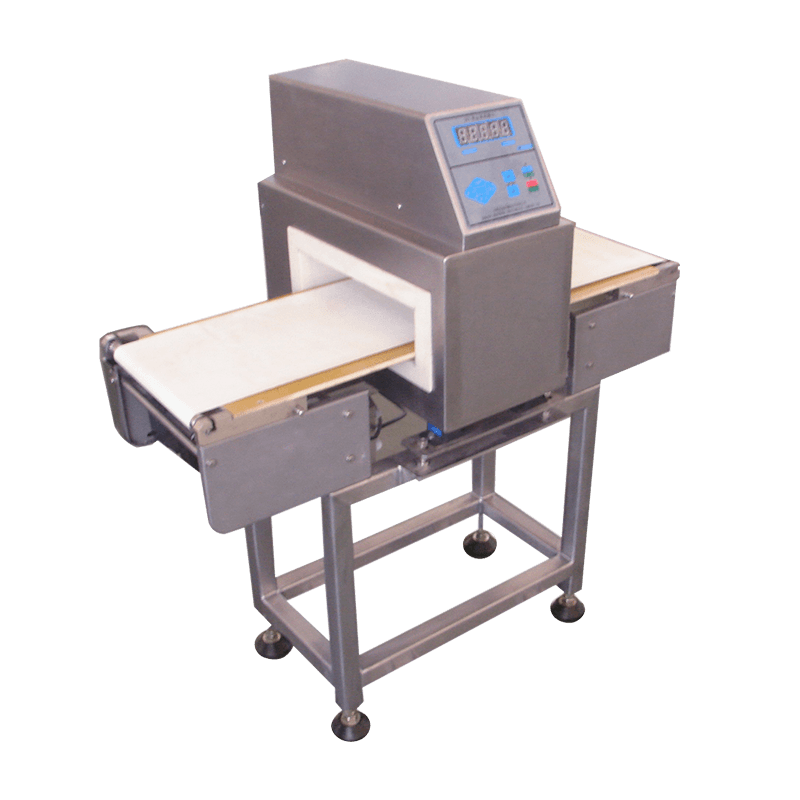
As the packages move along the conveyor belt, a sophisticated quality check occurs. Checkweighers automatically reject any package that is under or over the target weight. Metal detectors ensure no foreign objects made their way into the product. Finally, labelers apply regulatory information, barcodes, and branding.
3. End-of-Line Processing: Ready for Shipment
The finished, labeled packages aren’t done yet!
Cartoning and Case Packing
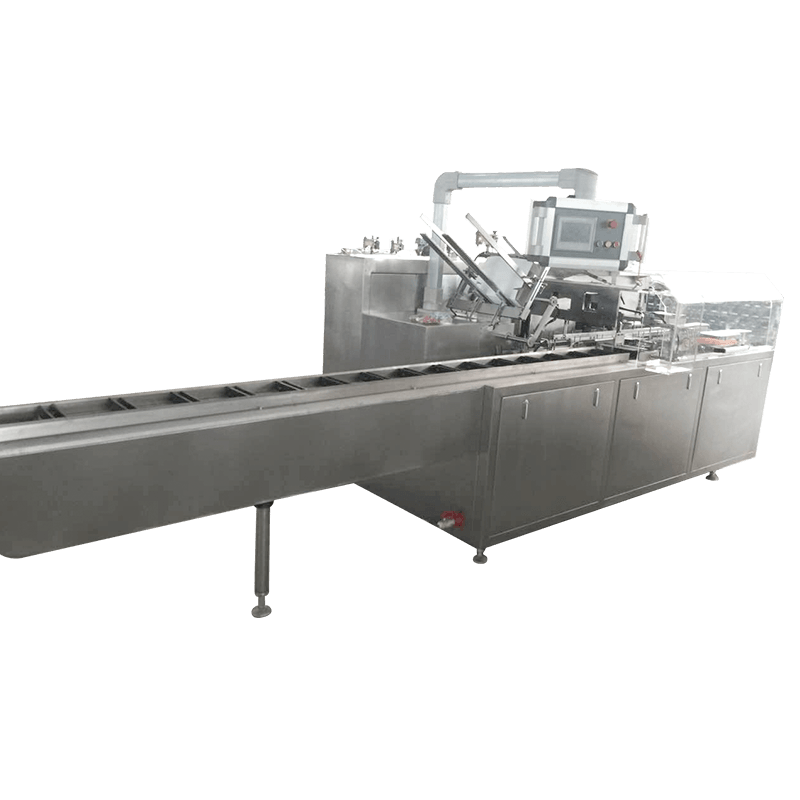
Individual packages are grouped together and inserted into display boxes (cartoning) or larger shipping boxes (case packing). Robotic arms or high-speed machinery perform this task with incredible speed and accuracy.
Palletizing
The final step before storage and distribution is palletizing . Robotic palletizers take the filled shipping boxes and stack them onto a wooden pallet in a predetermined, stable pattern, ready for wrapping and shipment to stores around the globe.
The Future: Smarter, Faster, and Greener
The evolution of these production lines is ongoing. The next generation of fully automatic systems is focused on Industry 4.0 principles:
- IoT (Internet of Things) Integration: Machines are equipped with thousands of sensors that constantly monitor temperature, pressure, speed, and quality. This data is instantly streamed to engineers, allowing them to predict maintenance needs before a breakdown occurs.
- Artificial Intelligence (AI): AI is being used to optimize the mixing and sealing parameters in real-time, adapting to slight variations in raw materials to ensure perfect consistency and minimize waste.
- Sustainability: New machines are designed to use less energy and are compatible with innovative, eco-friendly packaging materials like compostable films, reducing the environmental footprint of the product.
From a few basic ingredients to the final store shelf, the Fully Automatic Mixing and Packaging Production Line is the unseen engine that keeps our modern consumer world running smoothly, safely, and efficiently.




ติดต่อเรา